Verification Tool
AFIP Verify
Independent forensic verification for any digital content. No metadata required. No creator cooperation needed. Evidence-based analysis.
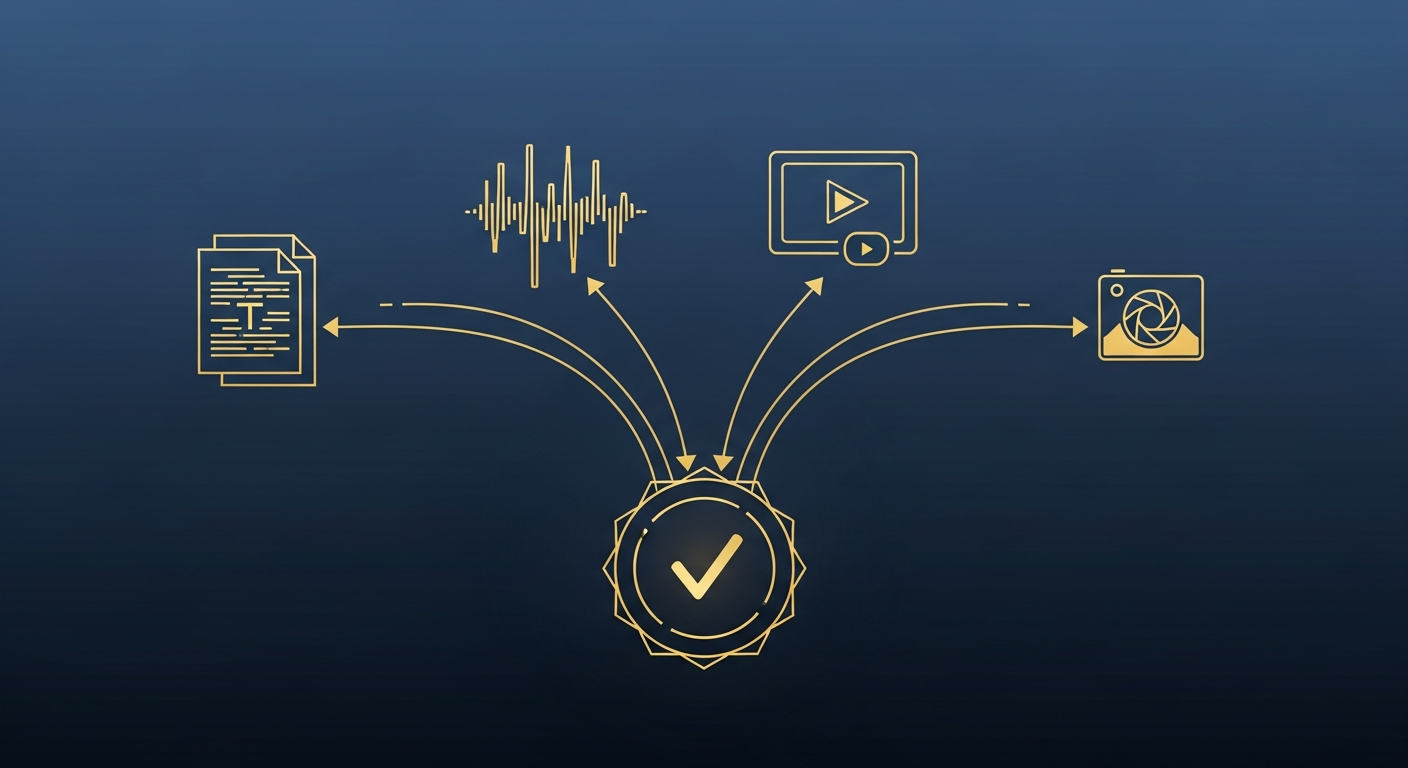
AFIP Verify applies multi-modal forensic analysis to determine whether content is authentic, AI-generated, or manipulated. Unlike metadata-based verification, AFIP Verify analyzes the content itself—it works on any file regardless of whether provenance metadata exists.
Each submission receives an independent forensic assessment including an integrity score, confidence level, and detailed analysis breakdown. Results are returned as a verifiable forensic attestation compliant with the AFIP Forensic Integrity Protocol.
The AFIP Verify portal is currently in private beta. Institutional access is available for qualifying organizations.
lock Request AccessPublic access launching Q3 2026
AI text detection, authorship analysis, linguistic forensics. Detects content generated by GPT, Claude, Gemini, Llama, and other large language models.
Deepfake detection, GAN fingerprinting, splice detection, AI-generated image identification. Analyzes pixel-level artifacts and structural inconsistencies.
Voice clone detection, synthetic speech identification, audio splice analysis. Spectral and biomarker-based examination across 14 vocal categories.
Deepfake video detection, face swap identification, temporal coherence analysis. Frame-by-frame and sequence-level forensic examination.
Verify user-submitted content, authenticate sources, and establish editorial confidence before publication. Embed AFIP verification into your editorial workflow.
Verify academic submissions for AI-generated content. Institutional-scale analysis with detailed reporting and audit trails for academic integrity.
Forensic-grade analysis meeting evidentiary standards. Chain-of-custody documentation, expert attestation, and courtroom-ready reporting.